

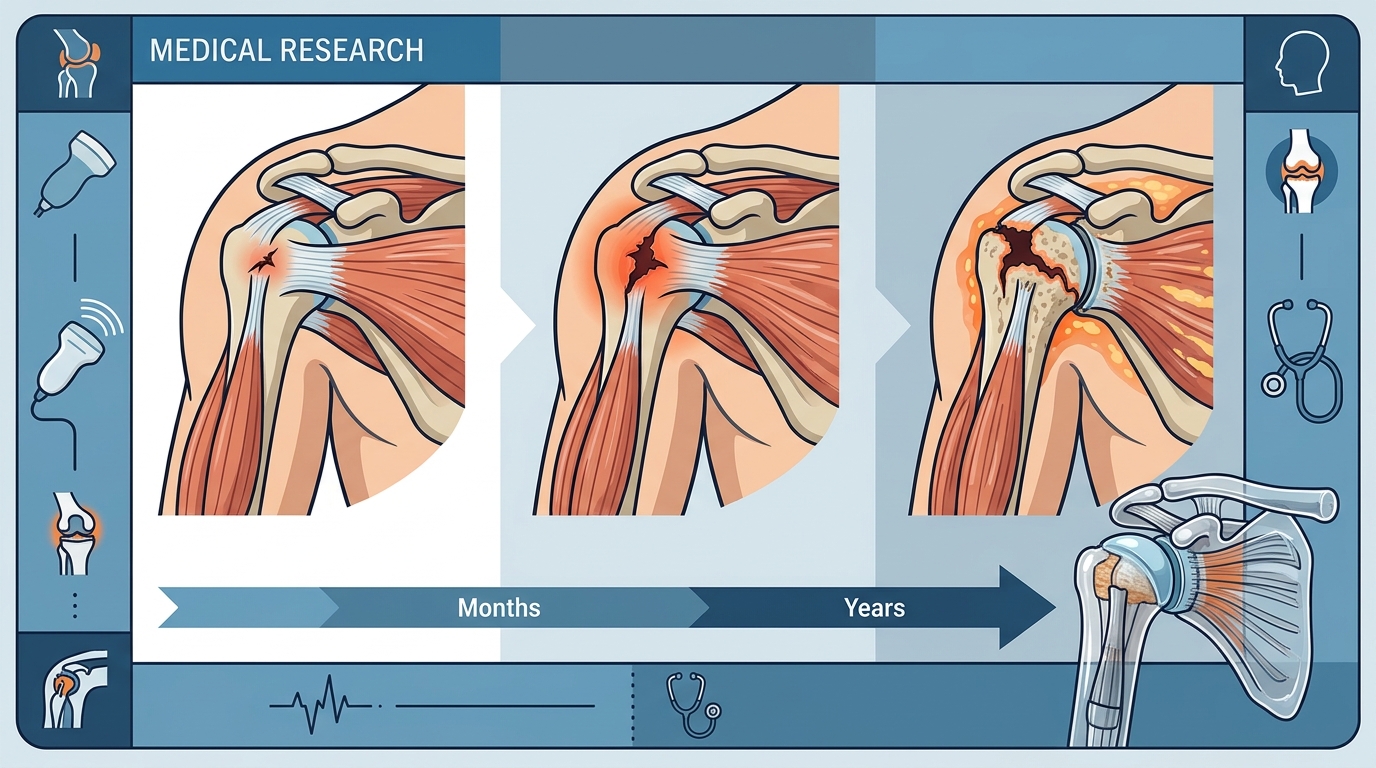
Untreated shoulder pain often leads to progressive muscle weakness, joint stiffness, and chronic disability over months and years. Research indicates that while some acute episodes resolve, a significant portion of patients experience persistent pain and functional decline without proper intervention. At Alaska Shoulder & Orthopaedic Institute, we emphasize early evaluation to prevent these long-term complications.
The Natural History of Shoulder Pain
Shoulder pain is one of the most common musculoskeletal complaints, with a 1-month population prevalence ranging from 7% to 26% according to a systematic review. The prognosis is highly variable. Approximately 40% of patients report persistent pain one year after initially consulting a primary care clinician. This statistic highlights that waiting for pain to resolve on its own is a risky strategy for many individuals.
Chronic shoulder pain is defined as pain lasting longer than three months. It creates a significant burden on daily living activities. Without treatment, the condition often transitions from an acute injury to a chronic state. This shift makes recovery slower and more difficult.
Progressive Muscle Atrophy and Weakness
When the shoulder is painful, patients naturally guard the joint. This protective behavior leads to disuse. Disuse causes the rotator cuff muscles to weaken and atrophy. Over months, this loss of muscle mass becomes permanent if not addressed. The rotator cuff is critical for stabilizing the shoulder joint during movement.
Weakness in the rotator cuff alters the biomechanics of the shoulder. The joint may begin to shift out of its normal alignment. This malalignment increases stress on the remaining healthy tissues. At Alaska Shoulder & Orthopaedic Institute, Dr. Kevin Paisley evaluates these mechanical changes to determine if surgical or non-surgical intervention is needed to restore strength.
Joint Stiffness and Adhesive Capsulitis
Untreated pain can lead to a condition known as adhesive capsulitis, commonly called frozen shoulder. This condition involves the thickening and tightening of the shoulder capsule. The painful phase can last from three to six months, followed by an adhesive phase where pain resolves but movement becomes severely restricted. This restriction occurs in all planes of motion.
Adhesive capsulitis is a specific example of how inactivity worsens shoulder health. The joint becomes locked in a position of comfort. Restoring full range of motion requires aggressive physical therapy or medical intervention. Delaying care often extends the duration of this stiff phase significantly.
Structural Deterioration and Arthritis
Chronic instability or repetitive micro-trauma can accelerate joint degeneration. Over years, untreated issues may contribute to the development of osteoarthritis. This degenerative process involves the wearing down of cartilage. The result is bone-on-bone friction and chronic inflammation.
Shoulder osteoarthritis is a progressive condition. It often leads to a gradual loss of function over time. Early management of underlying causes, such as rotator cuff tears or instability, may help slow this progression. However, once significant cartilage loss has occurred, the damage is often irreversible. This underscores the importance of addressing pain before it becomes a structural problem.
Impact on Quality of Life and Mental Health
These factors create a cycle of decline. Reduced activity leads to deconditioning. Deconditioning leads to more pain. Breaking this cycle requires a comprehensive treatment plan. At Alaska Shoulder & Orthopaedic Institute, we focus on restoring function to help patients return to work, recreation, and everyday activities.
Key Takeaways
- Shoulder pain has a 1-month prevalence of 7% to 26% in the general population.
- Approximately 40% of patients experience persistent pain one year after initial consultation.
- Disuse from pain leads to rotator cuff muscle atrophy and weakness.
- Adhesive capsulitis can develop, causing severe restriction of movement in all planes.
- Untreated structural issues may accelerate the development of osteoarthritis.
- Chronic pain negatively impacts sleep, mental health, and overall quality of life.
- Early evaluation is critical to prevent long-term functional decline.
Frequently Asked Questions
How long does shoulder pain typically last without treatment?
The duration varies widely. Some acute episodes resolve within six months. However, 40% of patients report persistent pain one year after seeking care. Chronic pain is defined as lasting more than three months.
Can untreated shoulder pain lead to permanent damage?
Yes. Prolonged disuse can cause permanent muscle atrophy. Additionally, untreated structural issues may lead to progressive joint degeneration and arthritis over time.
What is adhesive capsulitis?
Adhesive capsulitis, or frozen shoulder, is a condition where the shoulder capsule thickens and tightens. It causes severe restriction of movement and often follows a period of pain and inactivity.
Does shoulder pain affect mental health?
Yes. Chronic shoulder pain is associated with reduced quality of life, sleep disturbances, and higher rates of anxiety and depression.
When should I see a specialist for shoulder pain?
If pain persists beyond a few weeks, limits daily activities, or is accompanied by weakness, you should see a specialist. Early evaluation helps prevent long-term complications.
Conclusion
Ignoring shoulder pain is not a viable long-term strategy. The natural history of untreated shoulder conditions often involves progressive weakness, stiffness, and structural decline. At Alaska Shoulder & Orthopaedic Institute, we provide comprehensive evaluations to identify the source of your pain. Our goal is to recommend the treatment best suited to your condition, goals, and lifestyle. To schedule an evaluation, .