
Shoulder arthritis is a condition in which the normally smooth cartilage covering the ball and socket of the shoulder joint is lost due to disease, wear and tear, injury, or surgical misadventure. In Anchorage, patients have access to a comprehensive range of treatment options, from conservative management to advanced surgical reconstruction. This guide outlines the medical, regenerative, and surgical pathways available at the Alaska Shoulder & Orthopaedic Institute, helping you understand how to restore comfort and function to your shoulder. For additional details, review the wp.
Medications for Pain and Inflammation
Pharmacological management is often the first line of defense for shoulder arthritis. Non-steroidal anti-inflammatory drugs (NSAIDs) are commonly prescribed to reduce inflammation and manage pain. These medications work by inhibiting the enzymes that produce prostaglandins, which are chemical messengers that signal pain and swelling in the joint. For additional details, review the .
Acetaminophen may also be used for pain relief, particularly in patients who cannot tolerate NSAIDs due to gastrointestinal or renal concerns. While medications do not reverse the structural damage of arthritis, they can significantly improve quality of life by allowing patients to maintain mobility and sleep more comfortably. At the Alaska Shoulder & Orthopaedic Institute, Dr. Kevin Paisley evaluates the appropriate medication profile for each patient, considering their overall health and other medical conditions. For additional details, review the Customer Experience.
Corticosteroid and Hyaluronic Acid Injections
Intra-articular injections are a cornerstone of nonsurgical treatment for shoulder arthritis. Corticosteroid injections provide potent, short-term relief by directly reducing inflammation within the joint capsule. These injections are often used to break a cycle of pain and stiffness, allowing patients to participate more effectively in physical therapy. For additional details, review the Frequently Asked Questions.
Hyaluronic acid injections, also known as viscosupplementation, involve injecting a gel-like substance into the joint to improve lubrication and cushioning. Research indicates that high molecular weight hyaluronan can be beneficial for chronic shoulder pain associated with glenohumeral arthritis. The management of glenohumeral osteoarthritis is challenging, particularly in patients who are not eligible for surgery, making these injections a valuable interim solution. according to Intra articular injections
Arthroscopic Procedures
Arthroscopy is a minimally invasive surgical technique used to diagnose and treat shoulder conditions. While arthroscopy is not a cure for advanced arthritis, it can be used to address specific issues that contribute to pain, such as bone spurs or labral tears. In some cases, arthroscopic debridement can remove loose fragments of cartilage or bone that are causing mechanical irritation.
Regenerative Therapies: PRP
While PRP is not a guaranteed cure, it may help reduce pain and improve function by modulating the inflammatory response in the joint. Dr. Kevin Paisley offers PRP as part of a personalized treatment plan, ensuring that the therapy is appropriate for the specific stage and severity of the patient's arthritis.
Stem Cell Therapy
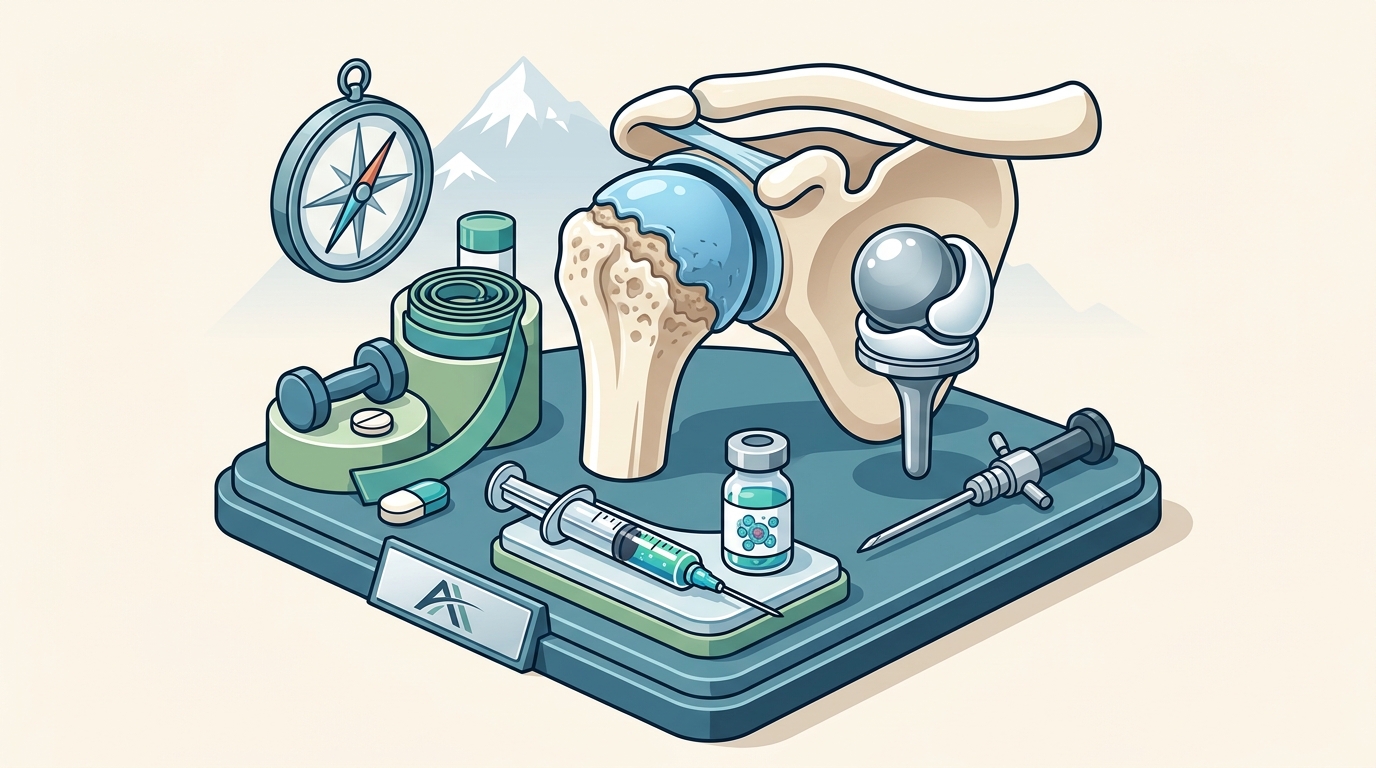
The Alaska Shoulder & Orthopaedic Institute is now offering rejuvenative therapies, including stem cell injections, for patients who are interested in exploring these options. These therapies are used off-label and are not FDA-approved for a particular orthopedic indication, so a thorough consultation is necessary to determine if they are appropriate for an individual patient.
Nonsurgical Arthritis Treatments
The quality of life of a person with shoulder arthritis can often be improved by optimizing the person's overall health, including weight management and cardiovascular fitness. There are some shoulder-specific therapies that can help manage symptoms and prevent further deterioration. A comprehensive nonsurgical approach allows many patients to delay or avoid the need for surgery.
Shoulder Replacement Surgery
When exercises and other nonsurgical treatments are not successful, most cases of shoulder arthritis are considered possible candidates for shoulder joint replacement arthroplasty. While in the past there were no effective surgical procedures for shoulder arthritis, now advanced techniques in surgical reconstruction can help restore comfort and function to the shoulder.
Shoulder replacement surgery involves replacing the damaged bone and cartilage with metal and plastic components. This procedure is typically reserved for patients with severe arthritis who have exhausted other treatment options. The Alaska Shoulder & Orthopaedic Institute is highly specialized in shoulder reconstruction, providing patients with the expertise needed for complex surgical cases.
Regenerative Injections Overview
Regenerative injections encompass a range of therapies designed to stimulate the body's natural healing processes. These include PRP, stem cells, and peptides. Each type of injection has a different mechanism of action and is suited to different patient profiles. The goal of regenerative injections is to reduce pain and improve function without the need for surgery.
Rotator Cuff Considerations
Glenohumeral joint arthritis is commonly accompanied by stiffness related to contracture and adhesions involving the glenohumeral capsule, the cuff muscles, and the surrounding soft tissues. The rotator cuff is a group of muscles and tendons that stabilize the shoulder joint. When arthritis is present, the rotator cuff may be weakened or torn, which can complicate treatment.
Dr. Kevin Paisley specializes in diagnosing and treating rotator cuff tears in conjunction with arthritis. The presence of a rotator cuff tear may influence the type of shoulder replacement surgery recommended, such as a reverse total shoulder replacement. A thorough evaluation of the rotator cuff is essential for developing an effective treatment plan.
Regenerative Medicine Injections
Regenerative medicine injections represent a shift from treating symptoms to addressing the underlying causes of pain. These therapies leverage the body's own biological resources to promote healing. Peptides, for example, are short chains of amino acids that can signal cells to repair tissue. The Alaska Shoulder & Orthopaedic Institute offers peptides as part of its rejuvenative therapy menu.
Patients interested in regenerative medicine should understand that these treatments are still evolving, and outcomes can vary. A consultation with Dr. Kevin Paisley or another qualified healthcare professional is necessary to determine whether a treatment is appropriate for an individual patient. The practice's goal is to identify the source of each patient's orthopedic problem and recommend the treatment best suited to their condition, goals, and lifestyle.
Key Takeaways
- Shoulder arthritis is a progressive condition that requires a tailored treatment plan.
- Injections such as corticosteroids and hyaluronic acid can provide temporary relief.
- Regenerative therapies like PRP and stem cells are emerging options for pain management.
- Arthroscopic procedures can address specific mechanical issues in the shoulder.
- Shoulder replacement surgery is a viable option for severe arthritis when other treatments fail.
- Dr. Kevin Paisley is a four-time recipient of the Anchorage Press Best Orthopedic Surgeon award.
Frequently Asked Questions
What is the best treatment for shoulder arthritis in Anchorage?
The best treatment depends on the severity of the arthritis and the patient's overall health. Nonsurgical options are typically tried first, followed by regenerative therapies or surgery if necessary. Dr. Kevin Paisley at the Alaska Shoulder & Orthopaedic Institute can help determine the most appropriate course of action.
Does PRP work for shoulder arthritis?
PRP may help reduce pain and improve function in some patients with shoulder arthritis. It is not a guaranteed cure, but it is a non-surgical option that can be considered during a consultation.
Can stem cells regenerate cartilage in the shoulder?
When is shoulder replacement surgery recommended?
Shoulder replacement surgery is recommended when nonsurgical treatments have failed and the patient is experiencing significant pain and loss of function. It is typically reserved for patients with severe arthritis.
Who is the best orthopedic surgeon in Anchorage?
Are regenerative injections FDA-approved?
Some regenerative injections, such as PRP, are used off-label and may not be FDA-approved for a particular orthopedic indication. A consultation is necessary to discuss the risks and benefits of these treatments.
How long does it take to recover from shoulder arthritis treatment?
Recovery time varies depending on the type of treatment. Nonsurgical treatments may take weeks to months to show improvement, while surgical recovery can take several months. Dr. Paisley will provide a personalized recovery plan based on the specific treatment. according to High molecular weight
Can I avoid surgery for shoulder arthritis?
Many patients can manage their shoulder arthritis with nonsurgical treatments and avoid surgery. However, some patients with severe arthritis may eventually require surgery to restore function and reduce pain.
Conclusion
Shoulder arthritis is a complex condition that requires a personalized approach to treatment. From medications and injections to regenerative therapies and surgery, there are many options available to help manage pain and restore function. The Alaska Shoulder & Orthopaedic Institute, led by Dr. Kevin Paisley, provides comprehensive care for patients in Anchorage. To plan your visit, to schedule a consultation and discuss your treatment options.