
Shoulder Pain Guide: When to See an Anchorage Orthopedic Specialist
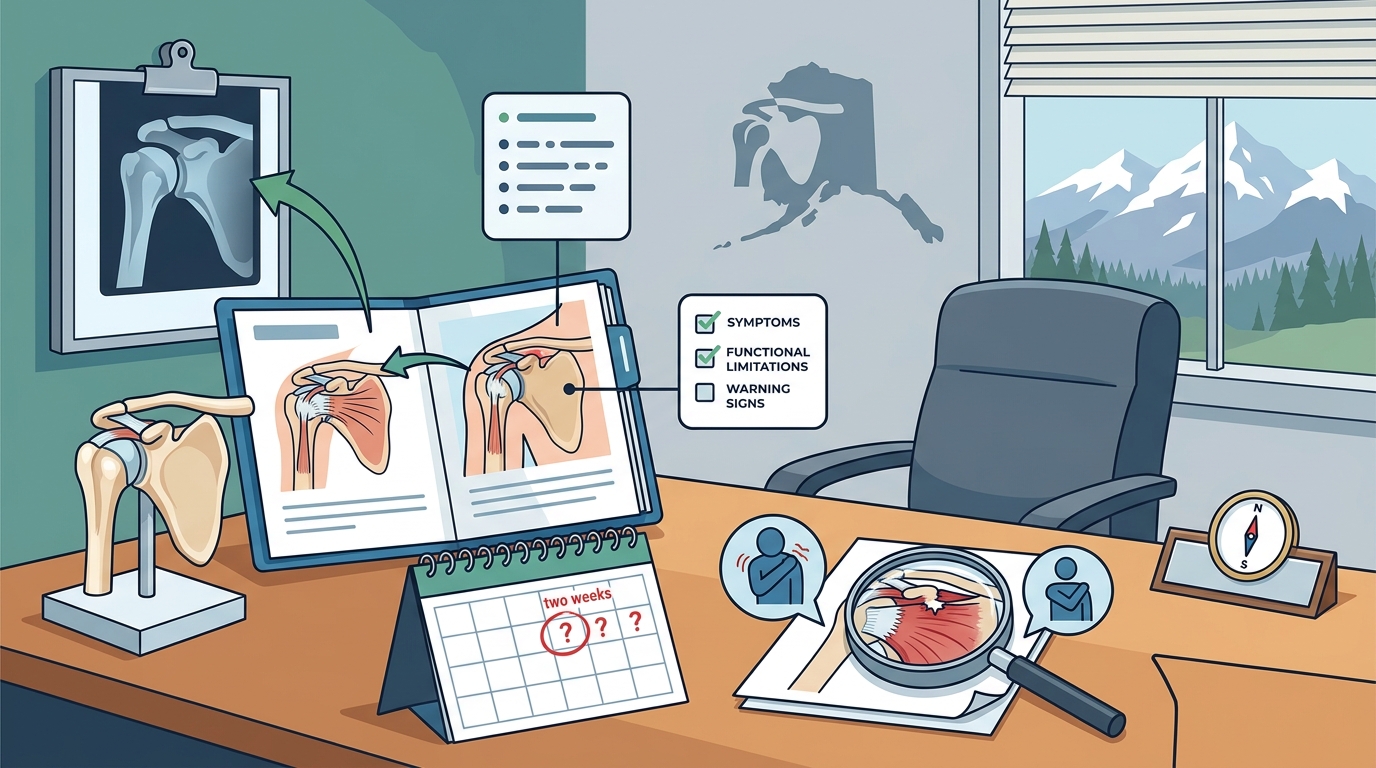
Consult an orthopedic specialist in Anchorage if shoulder pain persists beyond two weeks, limits daily tasks, or follows a specific injury. Alaska Shoulder & Orthopaedic Institute provides expert evaluation for complex shoulder conditions. This guide details the specific symptoms, functional limits, and warning signs that indicate the need for specialized medical care.
Functional Limitations
Difficulty with Reaching and Lifting
Patients frequently report an inability to reach behind their back to fasten a bra or put on a coat. Lifting objects above shoulder height, such as placing a box on a high shelf, may become painful or impossible. If these movements cause a sharp catch or a grinding sensation, the rotator cuff or labrum may be compromised. For additional details, review the wp.
Loss of Grip Strength
Shoulder instability often manifests as a loss of grip strength in the affected hand. You may find that you cannot hold a coffee mug, open a jar, or carry a grocery bag without the arm dropping. This weakness is not always due to the hand itself but rather a protective mechanism by the brain to prevent further injury to the shoulder joint. For additional details, review the .
Impact on Work and Recreation
For active individuals, the inability to participate in sports or work tasks is a critical signal. If you cannot swing a golf club, lift a hammer, or type for extended periods without pain, a specialist evaluation is warranted. Alaska Shoulder & Orthopaedic Institute focuses on restoring function so patients can return to their specific lifestyle goals.
Traumatic Injury Symptoms
Acute trauma is a clear trigger for immediate medical attention. Traumatic injury is a sudden physical event that causes damage to the bones, muscles, or ligaments of the shoulder. Unlike chronic pain that develops over time, traumatic symptoms appear instantly and are often severe. For additional details, review the Customer Experience.
Signs of Fracture or Dislocation
A visible deformity, such as a bump or a square-shaped shoulder, suggests a dislocation or fracture. Swelling that appears rapidly within minutes of the injury is also a hallmark of acute trauma. If you heard a loud pop or crack at the moment of injury, the bone or a major tendon may have been damaged.
Immediate Inability to Move
If you cannot move the arm at all after an accident, fall, or collision, do not attempt to force the joint. This indicates a potential dislocation or severe fracture. Immediate imaging is required to determine the extent of the damage and to prevent further complications to the surrounding nerves and blood vessels.
Instability and Weakness
Feeling of Slipping or Subluxation
Patients often describe a sensation of the shoulder