
Shoulder pain does not always resolve on its own, and waiting can sometimes lead to chronic stiffness or further tissue damage. At Alaska Shoulder & Orthopaedic Institute in Anchorage, we evaluate whether your symptoms require conservative management or advanced intervention. This guide explains how to determine if your pain is temporary or a sign of a structural issue that needs professional attention. For additional details, review the wp.
How to Choose a Provider
Choosing the right orthopedic provider is the first step in managing shoulder pain effectively. A specialized practice focuses on specific anatomical regions, which often leads to more precise diagnoses. At Alaska Shoulder & Orthopaedic Institute, our focus on shoulder reconstruction and related upper extremity conditions allows for a depth of expertise that generalists may not possess. For additional details, review the .
Specialization vs. General Practice
Scope of Treatment Options
What to Ask Before Committing
Before scheduling an appointment, it is helpful to understand the provider's approach to your specific condition. Asking the right questions helps you gauge whether the provider's philosophy aligns with your goals. For additional details, review the Customer Experience.
Questions About Diagnosis
Ask how the provider will determine the source of your pain. Will they use imaging like MRI or ultrasound? Understanding the diagnostic tools helps you prepare for the visit. For additional details, review the Frequently Asked Questions.
Questions About Treatment Philosophy
Inquire about the provider's stance on conservative versus surgical treatment. Do they attempt non-surgical options first? At our practice, we provide individualized treatment plans that consider both nonsurgical and surgical options based on your specific condition and lifestyle goals.
How to Verify Credentials
Verifying a provider's credentials ensures you are in the hands of a qualified professional. Board certification is a standard benchmark for orthopedic surgeons.
Board Certification
Board certification is a formal recognition that a physician has completed the necessary training and passed rigorous examinations. You can verify this status through the American Board of Orthopaedic Surgery. Dr. Kevin Paisley, D.O., is a board-certified orthopedic surgeon with a focus on shoulder care.
Professional Recognition
Professional awards can indicate peer recognition. Dr. Paisley is a four-time recipient of the Anchorage Press Best Orthopedic Surgeon award. While awards are subjective, they can serve as a data point in your decision-making process.
How the Evaluation Process Works
Understanding the workflow of an orthopedic evaluation helps reduce anxiety and sets realistic expectations. The process typically follows a structured sequence from initial consultation to treatment planning.
Initial Consultation
The first visit involves a detailed history and physical examination. The provider will assess your range of motion, strength, and pain levels. This step is critical for identifying the specific structures involved in your pain.
Diagnostic Imaging
If the physical exam suggests a structural issue, imaging may be ordered. MRI is the gold standard for soft tissue evaluation, such as rotator cuff tears. X-rays are used to assess bone alignment and arthritis.
Treatment Planning
What It Costs
Cost is a significant factor in healthcare decisions. Understanding what drives the price helps you budget for your care.
Factors Influencing Cost
The cost of orthopedic care varies based on the complexity of the condition and the type of treatment required. Conservative care is generally less expensive than surgical intervention. Insurance coverage plays a major role in out-of-pocket expenses.
Insurance and Billing
Most orthopedic practices accept major insurance plans. It is important to verify your benefits and understand your deductible and copay amounts before your visit. Our practice provides clear information on billing and insurance to help you navigate the financial aspects of your care.
Common Mistakes to Avoid
Patients often make mistakes that can delay recovery or worsen their condition. Being aware of these pitfalls can help you manage your shoulder pain more effectively.
Ignoring Early Symptoms
Many patients wait until pain becomes severe before seeking help. Early intervention can often prevent minor issues from becoming chronic problems. If your pain persists for more than a few weeks, it is worth getting it checked.
Self-Diagnosis
Online resources can be helpful, but they cannot replace a physical exam. Self-diagnosis can lead to incorrect treatment choices. A professional evaluation provides an accurate diagnosis based on clinical findings.
Professional Care vs. Self-Treatment
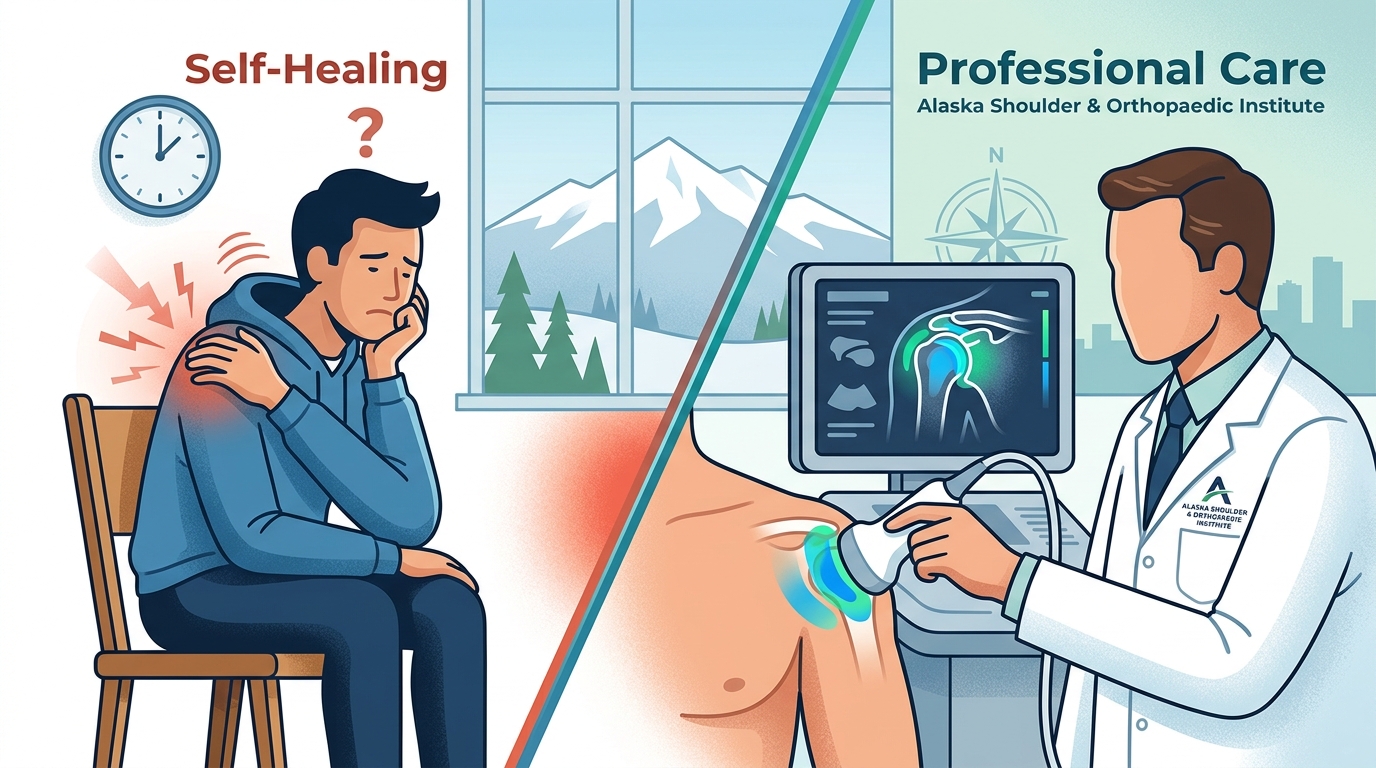
Deciding between self-treatment and professional care depends on the severity and duration of your symptoms. The following table compares the two approaches.
| Factor | Self-Treatment | Professional Care |
|---|---|---|
| Best For | Mild, acute pain | Persistent, severe, or structural pain |
| Duration | Short-term (days to weeks) | Long-term management |
| Risk | Delayed diagnosis | Minimal risk with proper evaluation |
| Outcome | Variable | Targeted and evidence-based |
Self-treatment may be appropriate for minor strains, but it is not suitable for conditions like rotator cuff tears or arthritis. Professional care provides a structured approach to diagnosis and treatment.
Specific Situations and Red Flags
Certain symptoms indicate that your shoulder pain requires immediate professional attention. These red flags should not be ignored.
Sudden Onset After Trauma
If your pain started after a fall or accident, it could indicate a fracture or dislocation. These conditions require prompt medical evaluation.
Loss of Function
If you cannot lift your arm or experience significant weakness, it may signal a rotator cuff tear. This is a structural issue that often requires professional intervention.
Rules and Patient Protections
Patients have rights and protections when seeking medical care. Understanding these can help you advocate for yourself.
Informed Consent
You have the right to understand the risks and benefits of any treatment before proceeding. Your provider should explain all options clearly, allowing you to make an informed decision.
Privacy and Confidentiality
Your medical information is protected by law. Your provider is required to maintain the confidentiality of your health records.
Local Specifics for Anchorage
Living in Anchorage presents unique challenges for shoulder health. The local environment and lifestyle can influence the types of injuries patients experience.
Climate and Activity
Anchorage's cold climate and active lifestyle, including outdoor recreation, can contribute to shoulder strain. Activities like skiing, hiking, and fishing are common in the region and can lead to overuse injuries.
Access to Care
Alaska Shoulder & Orthopaedic Institute is located in Anchorage, providing convenient access to specialized care for local residents. Our practice is dedicated to serving the Anchorage community with high-quality orthopedic services.
Timing and Outcomes
The timing of your evaluation can significantly impact your outcome. Early intervention often leads to better results.
Acute vs. Chronic Pain
Acute pain that resolves quickly may not require extensive evaluation. However, chronic pain that persists for months can lead to muscle atrophy and joint stiffness. Seeking care early can prevent these complications.
Seasonal Considerations
Some patients delay care until the weather improves. However, waiting can allow minor issues to become more complex. It is best to address shoulder pain as soon as it becomes persistent.
Results Over Time
Recovery from shoulder conditions is a gradual process. Understanding the timeline helps you stay committed to your treatment plan.
Conservative Care Timeline
Physical therapy and other conservative treatments typically take several weeks to months to show significant improvement. Consistency is key to achieving the best results.
Surgical Recovery
If surgery is required, recovery takes longer. Most patients can expect to return to daily activities within a few months, with full recovery taking up to a year. The specific timeline depends on the type of surgery and individual healing rates.
Key Takeaways
- Shoulder pain does not always go away on its own; persistent pain warrants professional evaluation.
- Choosing a specialized provider can lead to more accurate diagnoses and targeted treatments.
- Board certification and professional recognition are important indicators of a provider's qualifications.
- The evaluation process typically involves a physical exam, imaging, and a personalized treatment plan.
- Cost varies based on the complexity of the condition and the type of treatment required.
- Ignoring early symptoms can lead to chronic issues and more complex treatments later.
- Red flags like sudden trauma or loss of function require immediate medical attention.
- Early intervention often leads to better long-term outcomes and faster recovery.
Frequently Asked Questions
Will shoulder pain go away on its own?
Mild shoulder pain may resolve with rest and over-the-counter medication. However, pain that persists for more than a few weeks or is associated with weakness or loss of motion should be evaluated by a professional.
When should I see a doctor for shoulder pain?
You should see a doctor if your pain is severe, does not improve with rest, or is accompanied by swelling, bruising, or inability to move your arm. Sudden pain after an injury also warrants immediate attention.
What is the best orthopedic surgeon in Anchorage?
Dr. Kevin Paisley at Alaska Shoulder & Orthopaedic Institute is a highly specialized shoulder surgeon and a four-time recipient of the Anchorage Press Best Orthopedic Surgeon award. He is known for his expertise in shoulder reconstruction and individualized care.
How much does a shoulder evaluation cost?
The cost of a shoulder evaluation varies based on your insurance coverage and the complexity of the diagnosis. Our practice provides clear billing information to help you understand your out-of-pocket expenses.
Can I avoid surgery for a rotator cuff tear?
Some rotator cuff tears can be managed with conservative treatment, such as physical therapy and injections. However, large or full-thickness tears often require surgery for optimal recovery. Your provider will discuss the best option for your specific case.
How long does shoulder recovery take?
Recovery time depends on the condition and treatment. Conservative care may take several weeks to months, while surgical recovery can take up to a year. Consistency with rehabilitation is crucial for a successful outcome.
Does Alaska Shoulder & Orthopaedic Institute offer non-surgical options?
Yes, our practice offers a range of non-surgical options, including physical therapy, medications, and biologic treatments like platelet-rich plasma (PRP) and stem-cell-based therapies when clinically appropriate.
Next Steps
If you are experiencing persistent shoulder pain, it is time to take action. At Alaska Shoulder & Orthopaedic Institute, we are committed to helping you find relief and restore your quality of life. To schedule an evaluation with Dr. Kevin Paisley, please contact our office in Anchorage. We look forward to providing you with the specialized care you need.