
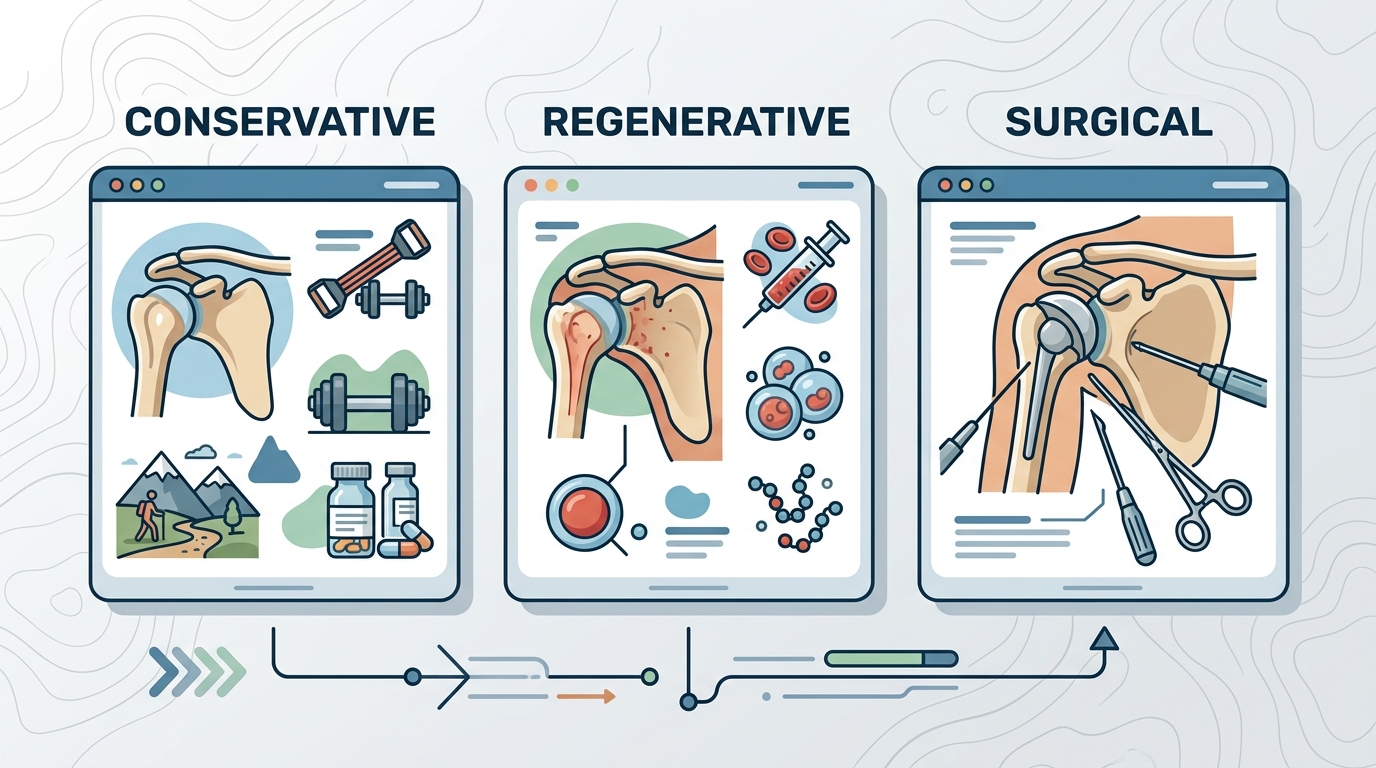
Shoulder arthritis is a progressive condition causing joint pain and stiffness. In Anchorage, patients have multiple treatment options ranging from conservative care to surgical reconstruction. This guide outlines the primary medical, interventional, and regenerative therapies available at the Alaska Shoulder & Orthopaedic Institute. We cover medications, injections, arthroscopic procedures, platelet-rich plasma (PRP), and stem cell therapies to help you understand your care pathway. For additional details, review the wp.
Medications for Pain and Inflammation
Medication management is often the first line of defense for shoulder arthritis. The goal is to reduce inflammation and manage pain to maintain mobility. Non-steroidal anti-inflammatory drugs (NSAIDs) are commonly prescribed to address both pain and swelling. These oral medications work by inhibiting enzymes that produce inflammatory chemicals in the body. For additional details, review the .
Oral Analgesics and Anti-inflammatories
Patients often start with over-the-counter options like ibuprofen or naproxen. For more severe cases, a physician may prescribe stronger NSAIDs or acetaminophen. It is crucial to monitor for gastrointestinal side effects when using NSAIDs long-term. Your provider will evaluate your medical history to determine the safest dosage and duration. For additional details, review the Customer Experience.
Topical Therapies
Topical NSAIDs and counter-irritants can provide localized relief with fewer systemic side effects. These creams and gels are applied directly to the shoulder area. They are particularly useful for patients who cannot tolerate oral medications due to stomach issues or kidney concerns. Combining topical treatments with physical therapy can enhance overall functional outcomes. For additional details, review the Frequently Asked Questions.
Corticosteroid and Hyaluronic Acid Injections
Fluoroscopic or Ultrasound Guidance
Accurate placement is critical for injection success. Providers often use ultrasound or fluoroscopic guidance to ensure the medication reaches the exact site of inflammation. This precision improves efficacy and reduces the risk of damaging surrounding tissues. At the Alaska Shoulder & Orthopaedic Institute, image-guided techniques are standard practice for complex shoulder cases.
Viscosupplementation
Hyaluronic acid injections, also known as viscosupplementation, aim to restore the natural lubrication of the joint. This treatment is more commonly associated with knee arthritis but is sometimes explored for shoulder conditions. The goal is to improve joint mechanics and reduce friction. While evidence for shoulder use is mixed, some patients report improved comfort and range of motion.
Arthroscopic Surgical Interventions
Arthroscopic Debridement
Debridement involves removing loose cartilage fragments and inflamed tissue from the joint. This can reduce mechanical irritation and pain. It is often performed when arthritis is mild to moderate and there is no significant bone-on-bone contact. The procedure helps restore smooth joint movement and can delay the need for more extensive reconstruction.
Rotator Cuff Repair
Shoulder arthritis often coexists with rotator cuff tears. Repairing the torn tendon can stabilize the joint and improve function. Dr. Kevin Paisley specializes in shoulder reconstruction, including complex rotator cuff repairs. Combining cuff repair with arthroscopic debridement addresses both the structural and inflammatory components of the condition.
Regenerative Therapies: PRP
The PRP Process
The procedure involves drawing a small amount of blood from the patient. The sample is then centrifuged to separate the platelet-rich plasma from other blood components. The concentrated plasma is injected into the affected shoulder area. This process is typically performed in the office setting and requires minimal downtime.
Clinical Application
Stem Cell and Peptide Therapies
Advanced regenerative therapies include stem cell-based treatments and peptide injections. Stem cell therapy involves using cells with the potential to differentiate into various tissue types. These cells may help repair damaged cartilage or reduce inflammation. Peptides are short chains of amino acids that can signal cells to heal or reduce pain.
Stem Cell Sources
Stem cells can be derived from bone marrow or adipose (fat) tissue. The choice of source depends on the patient's specific condition and the provider's protocol. These therapies are considered experimental for some orthopedic indications and may be used off-label. Patients should have a thorough discussion about the potential benefits and limitations with their surgeon.
Peptide Injections
Peptide injections are a newer addition to the regenerative medicine toolkit. They are designed to target specific pathways involved in pain and inflammation. Like PRP, peptides are injected directly into the affected area. The Alaska Shoulder & Orthopaedic Institute is now offering these rejuvenative therapies, including stem cells, peptides, and plasma injections, following a personal evaluation.
Comparison of Treatment Modalities
| Treatment Type | Primary Mechanism | Typical Duration of Relief | Invasiveness Level |
|---|---|---|---|
| Oral NSAIDs | Systemic inflammation reduction | Continuous while taking | Non-invasive |
| Corticosteroid Injection | Powerful local anti-inflammatory | 3 to 6 months | Minimally invasive |
| Arthroscopic Debridement | Mechanical removal of damaged tissue | Variable, often long-term | Surgical |
| PRP Injection | Growth factor stimulation | 6 to 12 months | Minimally invasive |
| Stem Cell Therapy | Tissue regeneration and modulation | Long-term potential | Minimally invasive |
Key Takeaways
- Shoulder arthritis treatment is highly individualized and depends on the severity of the condition.
- Medications and physical therapy form the foundation of conservative care.
- Image-guided injections can provide targeted relief when oral medications fail.
- Arthroscopic surgery is a minimally invasive option for structural repairs and debridement.
- Dr. Kevin Paisley has received the Anchorage Press Best Orthopedic Surgeon award four times.
- A comprehensive evaluation is necessary to determine the best treatment sequence.
- Combining multiple modalities often yields better outcomes than a single treatment.
Frequently Asked Questions
What is the best first step for treating shoulder arthritis?
Can PRP cure shoulder arthritis?
PRP is not a cure for advanced arthritis. It is a regenerative therapy that may help reduce pain and improve function by stimulating healing. It is most effective for mild to moderate cases or tendon injuries associated with arthritis.
How long does recovery take after arthroscopic surgery?
Recovery time varies depending on the specific procedure performed. Most patients can return to light activities within a few weeks. Full recovery and return to heavy activities may take several months. Physical therapy is a critical component of the recovery process.
Is stem cell therapy FDA-approved for shoulder arthritis?
Stem cell therapy for orthopedic indications is often used off-label. It is not universally FDA-approved for all shoulder conditions. Patients should discuss the regulatory status and potential risks with their provider.
Who is the best shoulder surgeon in Anchorage?
Dr. Kevin Paisley is a highly regarded shoulder surgeon in Anchorage. He has been recognized as the Anchorage Press Best Orthopedic Surgeon four times. His practice focuses on individualized care and advanced surgical techniques.
Can I avoid surgery for shoulder arthritis?
Many patients can manage shoulder arthritis without surgery. Conservative treatments like medications, injections, and physical therapy can be effective. However, if these options fail to provide adequate relief, surgery may be recommended.
What are the risks of corticosteroid injections?
How often can I receive PRP injections?
PRP injections are typically administered in a series or as a single treatment, depending on the protocol. The frequency is determined by the provider based on the patient's response and specific condition. It is not a daily or weekly treatment.
Conclusion
Navigating shoulder arthritis requires a clear understanding of the available treatment options. From conservative medications to advanced regenerative therapies, each modality serves a specific purpose in the care pathway. The Alaska Shoulder & Orthopaedic Institute provides comprehensive evaluation and treatment for shoulder conditions in Anchorage. To discuss your specific symptoms and determine the best course of action, for a consultation with Dr. Kevin Paisley.