
Choosing Between Orthopedic Surgeons and Pain Management Specialists for Chronic Shoulder Pain in Anchorage
Chronic shoulder pain affects approximately 66 million adults in the United States annually, with rotator cuff injuries and adhesive capsulitis being the most prevalent causes. For residents in Anchorage, Alaska, navigating the healthcare system to find the right specialist can be daunting. The decision often hinges on whether the underlying issue requires structural repair or symptom management. Understanding the distinct scopes of practice for orthopedic surgeons and pain management specialists is critical for determining the most effective treatment path. This guide clarifies the differences to help you make an informed decision about your shoulder health.
Understanding the Difference Between Specialists
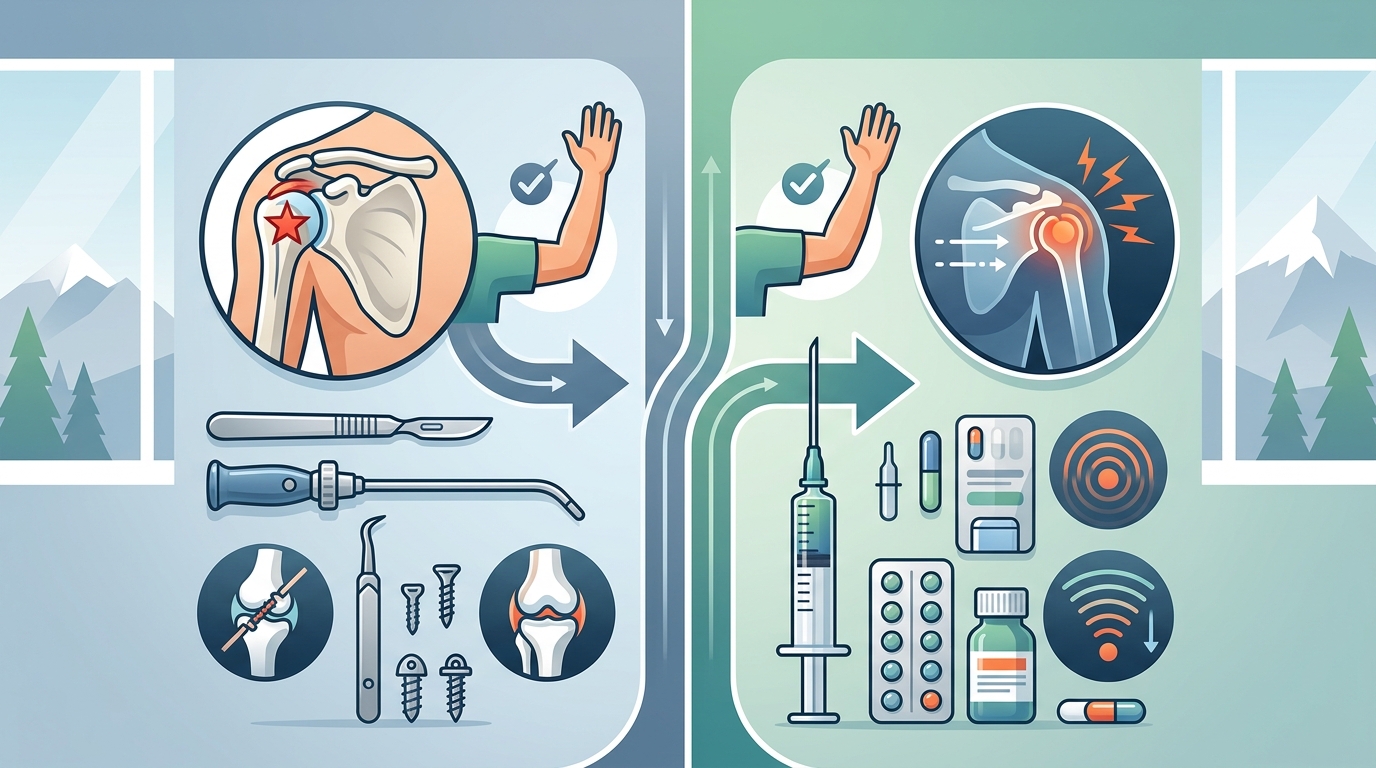
The primary distinction lies in the treatment philosophy. An orthopedic surgeon focuses on the structural integrity of the musculoskeletal system. Their goal is often to restore function through surgical intervention or targeted physical therapy protocols. In contrast, a pain management specialist focuses on reducing pain intensity and improving quality of life through non-surgical modalities. This might include medications, nerve blocks, or physical therapy referrals.
Orthopedic surgeons are medical doctors who specialize in the diagnosis and treatment of injuries and diseases of the musculoskeletal system. They undergo extensive training in both surgical and non-surgical treatments. Pain management specialists, often anesthesiologists or physiatrists, specialize in diagnosing and treating pain. They utilize a multidisciplinary approach to manage chronic conditions without necessarily resorting to surgery.
For patients in Anchorage, the choice often depends on the severity of the injury and the duration of symptoms. If you have experienced a recent trauma or have a known structural defect, an orthopedic specialist is typically the first point of contact. However, if your pain is chronic and has not responded to initial treatments, a pain management specialist may offer alternative relief strategies.
When to See an Orthopedic Surgeon
Orthopedic surgeons are essential for diagnosing structural abnormalities. They utilize advanced imaging techniques such as MRI and CT scans to visualize bones, joints, and soft tissues. This precision allows them to identify issues like torn ligaments, fractured bones, or degenerative arthritis.
Structural Repairs and Surgical Interventions
If your shoulder pain is caused by a rotator cuff tear, shoulder instability, or severe arthritis, surgery may be necessary. Orthopedic surgeons perform procedures such as arthroscopic repair, shoulder replacement, and stabilization surgeries. These interventions aim to restore the mechanical function of the shoulder joint.
According to data from the American Academy of Orthopaedic Surgeons, shoulder replacement surgeries have seen a significant increase in recent years due to an aging population and active lifestyles. Early consultation with an orthopedic specialist can prevent further damage and improve surgical outcomes.
Diagnostic Precision
Accurate diagnosis is the cornerstone of effective treatment. Orthopedic surgeons are trained to perform comprehensive physical examinations and interpret diagnostic tests. They can distinguish between referred pain from the neck and primary shoulder pathology. This distinction is crucial for developing an appropriate treatment plan.
For more information on shoulder anatomy and common injuries, you can visit the AAOS Shoulder Pain resource. Understanding the anatomy helps patients appreciate the complexity of shoulder mechanics and the importance of specialized care.
When to See a Pain Management Specialist
Pain management specialists are ideal for patients with chronic pain that has not responded to conservative treatments. They focus on reducing pain levels and improving daily function through non-surgical methods. This approach is particularly beneficial for those who are not candidates for surgery or prefer to avoid invasive procedures.
Non-Surgical Pain Relief
Pain management specialists utilize a variety of techniques to alleviate pain. These may include corticosteroid injections, nerve blocks, and radiofrequency ablation. These procedures target specific nerves or joints to reduce inflammation and block pain signals. The goal is to provide long-term relief without the risks associated with surgery.
Research indicates that interventional pain management can significantly improve quality of life for patients with chronic shoulder pain. A study published in the Journal of Pain Research highlights the efficacy of targeted injections in reducing pain scores and improving mobility.
Multidisciplinary Approach
Pain management specialists often work with a team of healthcare providers, including physical therapists and psychologists. This holistic approach addresses the physical, emotional, and social aspects of chronic pain. By combining medical treatments with lifestyle modifications, they help patients achieve sustainable pain relief.
For insights into non-surgical pain management strategies, refer to the Mayo Clinic's guide on pain management. Their resources provide valuable information on various treatment options and their effectiveness.
Comparing Treatment Approaches
Choosing between an orthopedic surgeon and a pain management specialist requires evaluating your specific condition and treatment goals. The table below summarizes the key differences in their approaches.
| Feature | Orthopedic Surgeon | Pain Management Specialist |
|---|---|---|
| Primary Focus | Structural repair and restoration | Symptom relief and quality of life |
| Treatment Methods | Surgery, physical therapy, bracing | Injections, medications, nerve blocks |
| Best For | Acute injuries, structural defects | Chronic pain, non-surgical candidates |
| Recovery Time | Variable, often weeks to months | Minimal, often immediate relief |
| Risk Profile | Surgical risks (infection, bleeding) | Procedure-related risks (infection, nerve damage) |
At AK Shoulder, we prioritize a patient-centered approach. We evaluate each case individually to determine the most appropriate specialist referral. Our goal is to ensure you receive the most effective care for your specific condition.
Key Takeaways
- Orthopedic surgeons specialize in structural repairs and are essential for acute injuries and surgical candidates.
- Pain management specialists focus on non-surgical relief and are ideal for chronic pain conditions.
- Accurate diagnosis is critical for determining the correct specialist and treatment path.
- Surgical outcomes are often improved with early consultation and intervention.
- Non-surgical options can provide significant relief for patients who are not surgical candidates.
- Multidisciplinary care addresses the holistic needs of patients with chronic pain.
- Local expertise in Anchorage ensures access to specialized shoulder care.
Frequently Asked Questions
How do I know if I need surgery for shoulder pain?
Surgery is typically recommended when conservative treatments fail to relieve pain or when there is a significant structural defect, such as a torn rotator cuff. An orthopedic surgeon can assess your condition through physical examination and imaging to determine if surgery is necessary.
Can pain management specialists perform surgery?
No, pain management specialists do not perform surgery. They focus on non-surgical interventions to manage pain. However, they may collaborate with orthopedic surgeons to provide comprehensive care.
What is the recovery time for shoulder surgery?
Recovery time varies depending on the type of surgery. Arthroscopic procedures may have a shorter recovery time of a few weeks, while shoulder replacement surgery may require several months of rehabilitation.
Are injections from pain management specialists safe?
Yes, injections such as corticosteroids and nerve blocks are generally safe when performed by experienced specialists. They carry minimal risks, such as infection or temporary pain at the injection site.
How can I find a qualified shoulder specialist in Anchorage?
You can find qualified specialists by seeking referrals from your primary care physician or searching for board-certified orthopedic surgeons and pain management specialists in your area. AK Shoulder offers expert care for shoulder conditions in Anchorage.
What are the signs of a rotator cuff tear?
Signs include weakness in the arm, difficulty lifting the arm, pain at rest or at night, and a clicking sensation when moving the arm. Early diagnosis is crucial for effective treatment.
Is physical therapy necessary after shoulder surgery?
Yes, physical therapy is a critical component of post-surgical recovery. It helps restore range of motion, strength, and function to the shoulder joint.
Contact AK Shoulder
If you are experiencing chronic shoulder pain in Anchorage, do not wait to seek help. Early intervention can prevent further damage and improve your quality of life. Contact AK Shoulder today to schedule a consultation with our expert team. We are dedicated to providing personalized care and effective treatment plans for your shoulder health.