Chronic shoulder pain affects millions of adults, with rotator cuff tears and osteoarthritis being the most common culprits. Recent clinical data indicates that over 1.5 million shoulder surgeries are performed annually in the United States alone, highlighting the urgent need for effective non-surgical alternatives. For residents in Anchorage, Alaska, accessing advanced regenerative medicine has become a viable path to restoring mobility without the risks of invasive surgery. This guide compares Platelet-Rich Plasma (PRP) and Stem Cell Therapy to help you make an informed decision.
Understanding PRP Therapy
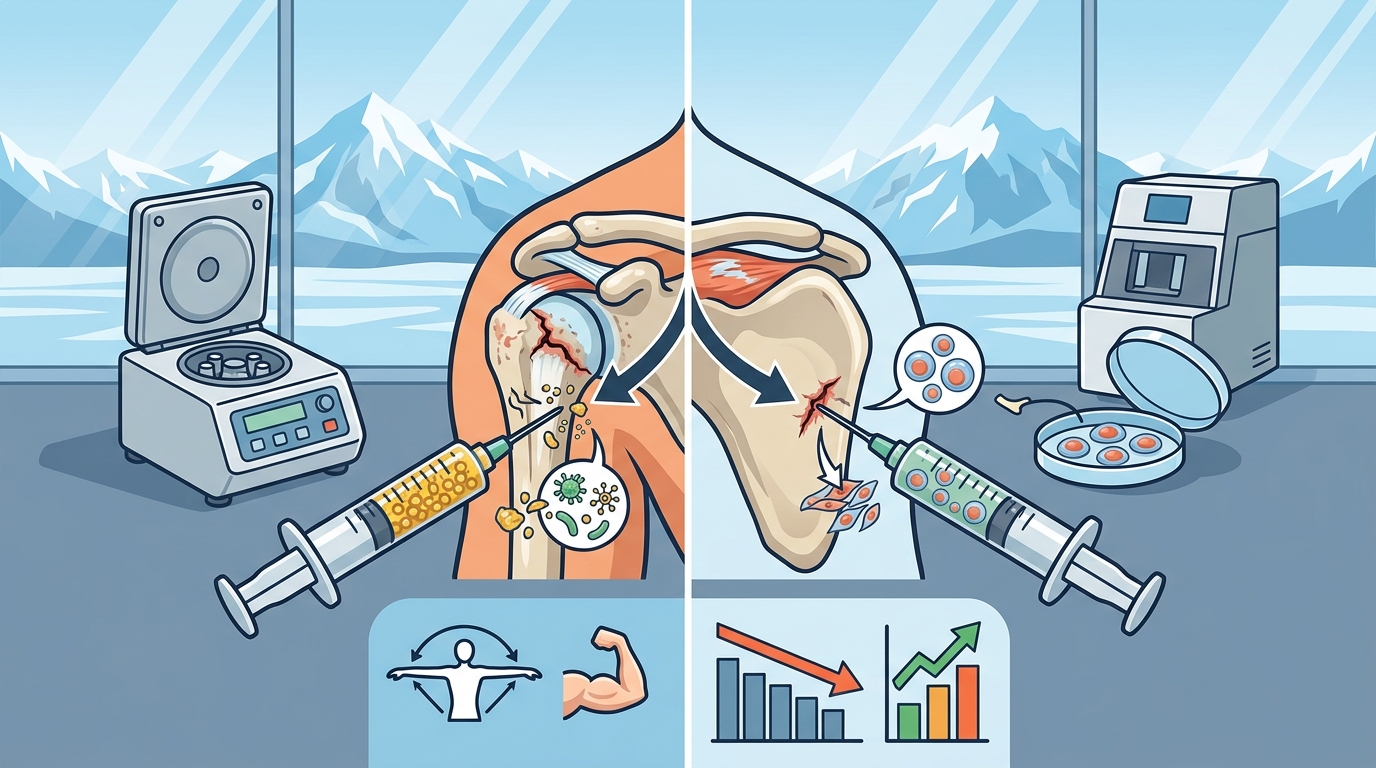
Platelet-Rich Plasma (PRP) therapy is a regenerative treatment that utilizes the patient's own blood to promote healing. The process involves drawing a small amount of blood, which is then placed in a centrifuge to separate the platelets from red blood cells. Platelets are rich in growth factors that stimulate tissue repair and reduce inflammation.
PRP is particularly effective for mild to moderate tendonitis, bursitis, and early-stage osteoarthritis. At Ak Shoulder, we use advanced centrifugation technology to ensure the highest concentration of platelets are delivered directly to the injured site. This targeted approach helps accelerate the body's natural healing response.
Many patients in Anchorage choose PRP because it is minimally invasive and has a low risk of adverse reactions. Since the treatment uses autologous material, there is no risk of rejection or disease transmission. The procedure is typically performed in our clinic under ultrasound guidance to ensure precise placement of the plasma.
Stem Cell Therapy Explained
Stem cell therapy represents a more advanced tier of regenerative medicine. It involves the use of mesenchymal stem cells (MSCs) to regenerate damaged tissue. These cells have the unique ability to differentiate into various cell types, including bone, cartilage, and muscle tissue. This makes them highly effective for severe degenerative conditions.
According to recent orthopedic studies, stem cell therapy can offer longer-lasting relief for patients with full-thickness rotator cuff tears or advanced joint degeneration. The treatment often involves harvesting stem cells from the patient's bone marrow or adipose tissue. At Ak Shoulder, we carefully evaluate each patient to determine if they are a suitable candidate for this more intensive protocol.
Stem cell therapy is not a one-size-fits-all solution. It requires a more complex preparation process and is generally reserved for cases where PRP has failed or where the structural damage is significant. The goal is to not just reduce symptoms but to actively repair the underlying tissue architecture.
Key Differences and Efficacy
Choosing between PRP and stem cell therapy depends on the severity of your injury and your specific physiological response. PRP acts as a biological signal to kickstart healing, while stem cells act as building blocks to replace damaged tissue.
| Feature | PRP Therapy | Stem Cell Therapy |
|---|---|---|
| Source | Patient's own blood | Bone marrow or adipose tissue |
| Best For | Mild to moderate tendonitis | Severe degeneration and tears |
| Recovery Time | 1-2 weeks | 2-4 weeks |
| Cost Range | Lower | Higher |
Research published in the Journal of Orthopaedic Surgery suggests that while PRP is effective for many soft tissue injuries, stem cells may offer superior outcomes in cases of significant cartilage loss. However, individual results vary based on age, overall health, and the chronicity of the injury.
Cost and Insurance Considerations
One of the most common questions patients ask is whether insurance covers these treatments. Currently, most insurance plans in Alaska do not cover regenerative medicine procedures for shoulder injuries. This is because they are often classified as experimental or elective.
At Ak Shoulder, we provide transparent pricing for both PRP and stem cell therapies. While stem cell therapy is more expensive due to the complexity of the procedure, it may be more cost-effective in the long run by preventing the need for future surgeries. We offer financing options to make these treatments accessible to more patients.
It is important to note that the cost of PRP is generally lower, making it a popular first-line treatment. If PRP does not provide sufficient relief, patients can then consider stem cell therapy as a next step. This tiered approach allows for a strategic management of healthcare costs.
Recovery and Lifestyle Impact
Recovery times differ significantly between the two treatments. PRP patients typically experience some soreness for a few days after the injection. Most can return to light activities within a week, with full benefits appearing over several months.
Stem cell therapy requires a more cautious approach. Patients are often advised to avoid strenuous activity for a longer period to allow the cells to integrate and begin the regeneration process. However, the long-term benefits often include a greater restoration of function and strength.
Living in Anchorage offers unique challenges for shoulder health, particularly with cold weather exacerbating joint pain. Both treatments can help reduce this sensitivity by improving blood flow and reducing inflammation. Many patients report a significant improvement in their ability to perform daily tasks and enjoy outdoor activities after treatment.
Key Takeaways
- PRP Source: Derived from the patient's own blood, utilizing growth factors to stimulate healing.
- Stem Cell Source: Typically harvested from bone marrow or fat, offering regenerative potential for severe damage.
- Efficacy: PRP is ideal for mild to moderate injuries, while stem cells are better for severe degeneration.
- Cost: PRP is generally more affordable, but stem cells may offer better long-term value.
- Insurance: Most insurance plans do not cover these treatments, requiring out-of-pocket payment.
- Recovery: PRP has a shorter recovery time, while stem cells require a more extended rest period.
- Provider: Ak Shoulder provides both treatments with ultrasound guidance for precision.
Frequently Asked Questions
Is PRP therapy painful?
Most patients report mild discomfort during the injection. We use local anesthesia to minimize pain, and any soreness afterward typically resolves within a few days.
How long do stem cell results last?
Results can last from several months to years, depending on the severity of the injury and the patient's lifestyle. Many patients experience long-term relief.
Can I drive after the procedure?
For PRP, you can usually drive home after the procedure. For stem cell therapy, we recommend having someone drive you due to the potential for soreness and the use of sedation.
What is the success rate of these treatments?
Success rates vary, but studies show that over 70% of patients experience significant pain reduction and improved function with PRP. Stem cell therapy has shown even higher rates of structural improvement in severe cases.
Are there any side effects?
Side effects are generally minimal and include temporary soreness, swelling, or bruising at the injection site. Serious complications are rare.
How many treatments are needed?
Most patients require one to three sessions of PRP. Stem cell therapy is often a single procedure, but follow-up evaluations are necessary to monitor progress.
Is stem cell therapy FDA approved?
The FDA regulates stem cell products strictly. We use autologous stem cells processed in accordance with FDA guidelines for minimally manipulated tissues.
Schedule Your Consultation
If you are suffering from shoulder pain in Anchorage, do not wait until the condition worsens. Early intervention with regenerative medicine can save you from surgery and restore your quality of life. Contact Ak Shoulder today to schedule a consultation and discuss which treatment option is right for you.