
The shoulder joint is the most mobile articulation in the human body, yet this freedom of movement comes at the cost of inherent instability. According to the American Academy of Orthopaedic Surgeons, shoulder pain is one of the most common reasons patients seek medical attention, with millions of visits recorded annually for rotator cuff injuries and impingement syndromes. Understanding the intricate biomechanics of the glenohumeral joint is essential for effective diagnosis and long-term recovery. At AK Shoulder, we specialize in navigating these complexities to restore function and alleviate pain through evidence-based protocols.
Understanding Shoulder Anatomy
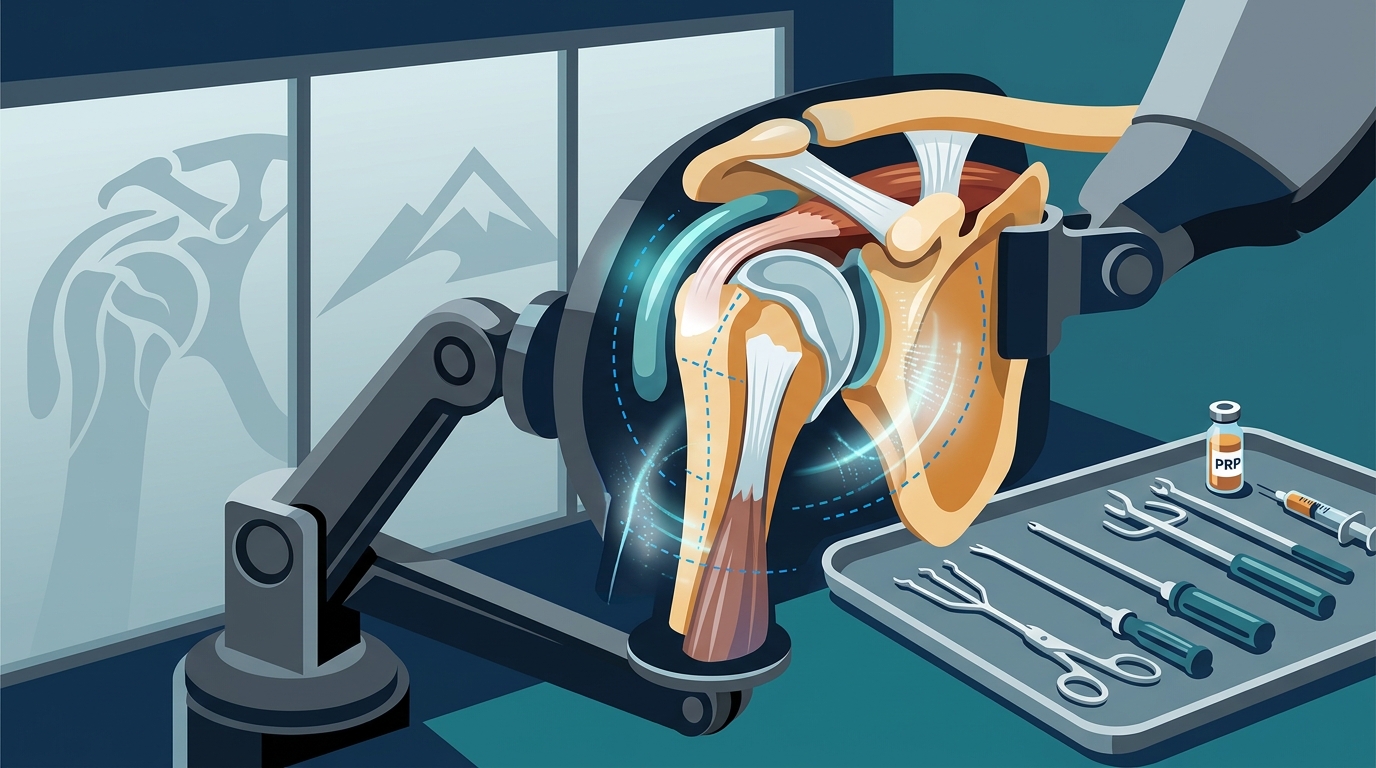
To appreciate the severity of shoulder injuries, one must first understand the structural foundation. The shoulder is a ball-and-socket joint, where the humeral head fits into the glenoid cavity of the scapula. This configuration allows for a wide range of motion but relies heavily on soft tissue stability.
Rotator cuff muscles are four specific muscles that stabilize the joint and facilitate movement. These include the supraspinatus, infraspinatus, teres minor, and subscapularis. When these muscles or their tendons are compromised, the entire kinetic chain of the upper extremity is affected. A glenohumeral joint is the primary articulation between the arm bone and the shoulder blade, serving as the central pivot for arm elevation and rotation.
Additionally, the labrum, a ring of cartilage that lines the glenoid, acts as a suction cup to hold the humeral head in place. Damage to this structure can lead to chronic instability and pain, often requiring specialized intervention beyond standard physical therapy.
Common Shoulder Conditions
Shoulder pathologies vary widely in origin and presentation. Identifying the specific condition is the first step toward effective treatment. At AK Shoulder, we frequently evaluate patients presenting with the following issues:
Rotator Cuff Tears
A rotator cuff tear occurs when one or more of the tendons in the rotator cuff are torn. This can result from acute injury or chronic degeneration. Data shows that the prevalence of rotator cuff tears increases significantly with age, affecting a large portion of the population over 60. Symptoms typically include weakness, difficulty lifting the arm, and night pain that disrupts sleep.
Shoulder Impingement
Shoulder impingement happens when the tendons of the rotator cuff or the bursa become compressed under the acromion. This compression leads to inflammation and pain during overhead activities. According to recent orthopedic studies, repetitive overhead motions are a primary risk factor for developing impingement syndrome.
Shoulder Instability
Instability refers to the sensation that the shoulder is slipping out of its socket. This can be traumatic, resulting from a dislocation, or atraumatic, due to ligamentous laxity. Patients often report a feeling of looseness or fear that the joint will dislocate during certain movements.
Adhesive Capsulitis
Also known as frozen shoulder, this condition involves the thickening and tightening of the shoulder capsule. It progresses through stages of freezing, frozen, and thawing, often causing significant stiffness and pain. Research indicates that individuals with diabetes are at a higher risk for developing adhesive capsulitis.
The Diagnostic Process
Accurate diagnosis is critical for determining the appropriate treatment pathway. At AK Shoulder, our diagnostic approach is thorough and patient-centered. We begin with a detailed clinical history to understand the mechanism of injury and the patient's functional goals.
Physical examination maneuvers, such as the Neer test and Hawkins-Kennedy test, help identify impingement and rotator cuff pathology. Imaging plays a crucial role in confirming these findings. X-rays provide a view of the bone structure, while MRI or ultrasound offers detailed visualization of soft tissues, including tendons and ligaments.
Advanced diagnostic techniques may include diagnostic injections to pinpoint the source of pain. If a specific joint space or tendon sheath is injected with anesthetic and pain relief is immediate, it confirms the pain generator. This precision allows us to tailor treatment plans that address the root cause rather than just the symptoms.
Treatment Options
Treatment for shoulder conditions is not one-size-fits-all. We utilize a tiered approach, starting with conservative management and progressing to surgical intervention only when necessary. The following table outlines the primary treatment modalities we employ:
| Treatment Modality | Description | Best For |
|---|---|---|
| Physical Therapy | Targeted exercises to strengthen muscles and improve range of motion. | Mild to moderate impingement, post-surgical rehab. |
| Corticosteroid Injections | Anti-inflammatory medication delivered directly to the joint. | Acute inflammation, pain relief for therapy participation. |
| Arthroscopic Surgery | Minimally invasive procedure to repair tears or decompress the joint. | Full-thickness tears, chronic instability. |
| Shoulder Replacement | Prosthetic replacement of the joint surfaces. | Severe arthritis, massive irreparable tears. |
Conservative treatments are often the first line of defense. Physical therapy focuses on restoring the balance between the rotator cuff and the deltoid muscle. If conservative measures fail to provide relief, we consider interventional procedures. Our injection therapies can provide significant pain relief, allowing patients to engage more effectively in rehabilitation.
For structural damage that does not heal with rest and therapy, surgical options are available. Arthroscopic surgery allows for precise repair of torn tendons or labral tears through small incisions. This minimally invasive approach reduces recovery time and post-operative pain compared to open surgery. In cases of severe joint degeneration, shoulder replacement may be recommended to restore function and eliminate pain.
Recovery Phases
Recovery from shoulder injuries or surgery is a gradual process that requires patience and adherence to rehabilitation protocols. The timeline varies depending on the severity of the condition and the type of treatment received.
In the initial phase, the focus is on pain management and protecting the injured structures. This may involve the use of slings, ice, and anti-inflammatory medications. As pain subsides, gentle range-of-motion exercises are introduced to prevent stiffness.
The strengthening phase begins once sufficient healing has occurred. This involves progressive resistance exercises to rebuild the rotator cuff and scapular stabilizers. Patients must avoid heavy lifting and overhead activities until cleared by their specialist.
The final phase focuses on functional restoration and return to sport or work. This includes sport-specific drills or ergonomic adjustments for occupational demands. Consistent communication with your AK Shoulder team ensures that the rehabilitation plan is adjusted as needed to optimize outcomes.
Key Takeaways
- The shoulder is the most mobile joint in the body, making it prone to instability and injury.
- Rotator cuff tears are a common condition, particularly in individuals over the age of 60.
- Accurate diagnosis requires a combination of physical examination and advanced imaging techniques.
- Conservative treatments, such as physical therapy and injections, are often effective for many shoulder conditions.
- Surgical options like arthroscopy offer minimally invasive solutions for structural damage.
- Recovery is a phased process that requires adherence to rehabilitation protocols.
- Early intervention can prevent chronic pain and long-term functional limitations.
Frequently Asked Questions
How long does it take to recover from a rotator cuff tear?
Recovery time varies based on the size of the tear and the treatment method. Non-surgical recovery may take several weeks to months, while surgical repair can require six months or more for full rehabilitation.
What is the difference between impingement and frozen shoulder?
Impingement involves compression of tendons under the acromion, causing pain during movement. Frozen shoulder involves stiffness and loss of range of motion due to capsule thickening, often with less acute pain.
When is surgery recommended for shoulder pain?
Surgery is typically recommended when conservative treatments fail to provide relief after a reasonable period, usually three to six months, or when there is significant structural damage like a full-thickness tear.
Can physical therapy cure shoulder impingement?
Physical therapy can effectively treat many cases of impingement by strengthening the surrounding muscles and improving shoulder mechanics. However, severe cases may require additional interventions.
What are the risks of shoulder replacement surgery?
Risks include infection, blood clots, nerve damage, and implant loosening. However, modern techniques have significantly reduced these risks, and the procedure is generally safe and effective for appropriate candidates.
How do I know if I need to see a shoulder specialist?
If you experience persistent pain, weakness, or limited range of motion that does not improve with rest, it is advisable to consult a specialist for a comprehensive evaluation.
What is the success rate of arthroscopic shoulder surgery?
Arthroscopic shoulder surgery has a high success rate, with most patients experiencing significant pain relief and improved function. Outcomes depend on the specific pathology and patient compliance with rehabilitation.
Contact AK Shoulder
If you are experiencing shoulder pain or suspect an injury, do not wait for it to resolve on its own. Early diagnosis and treatment are crucial for optimal outcomes. Visit our contact page to schedule an appointment with our team of experts. We are dedicated to providing personalized care and helping you return to the activities you love. Explore our services to learn more about the comprehensive care we offer.